YOU ARE PART OF HISTORY
Haus der Geschichte
Germany constantly reinvents itself in the turbulent period after World War II. At the Haus der Geschichte, you can experience this transformation up close. From the ruins of war, Germany rebuilt itself, split in two, became one again, and had to redefine itself in a new, rapidly globalizing world. Our challenge: how do we maintain enough distance to interpret this recent history, while at the same time bringing it close enough for people to experience that it is also their own story?
- Location
- Bonn (DE)
- Client
- Haus der Geschichte
- Year
- 2025
- Service
- Exhibition design (LPH 1-7), 3d, 2d, media concept, production management

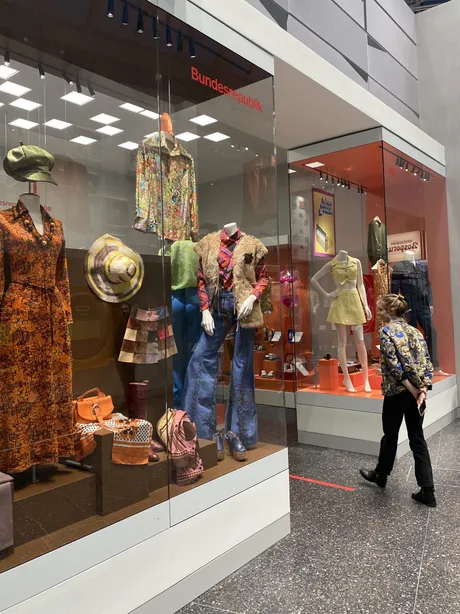
History consists of people...
History is not something that just happens to us. It is the sum of people’s actions. People have lived, colored, shaped, and changed history. They had to make choices: stay or go, protest or cooperate, me or us. This lived experience is our guiding principle throughout the exhibition.
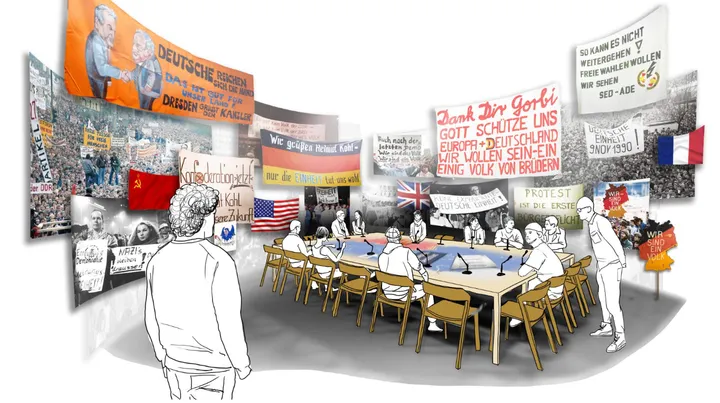
...and you are one of them!
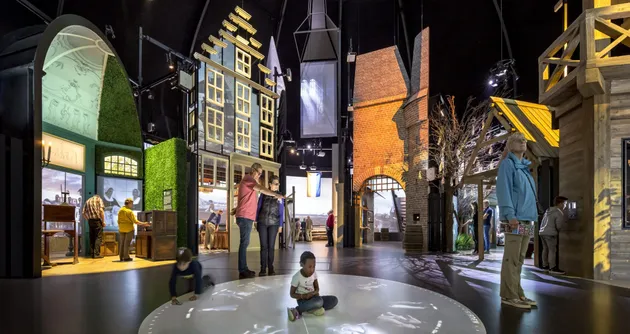
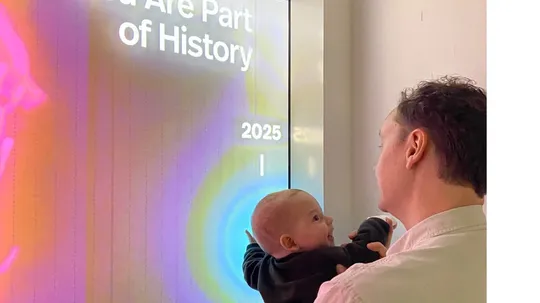
You, too, influence the course of history. And history influences you right back. We want to make that personal relationship with the past tangible. On each floor, large interactive installations help us to step outside the exhibition’s timeline for a moment. We introduce visitors to the people who came before us in time, and we invite them to look for similarities. Where you live, what your name is, and the causes that move you: these people were not all that different from us.
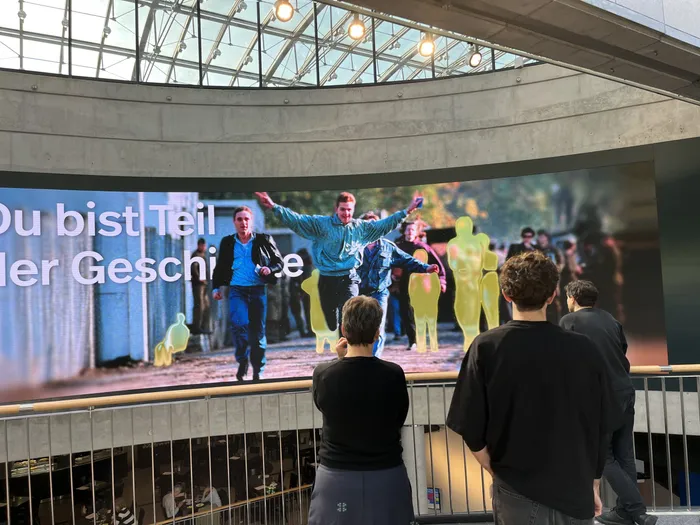
History isn’t something that just happens to you, it’s something you actively create together. We want to instill a sense of responsibility in our visitors: you have an impact on the present, and thus on the future!
Project data
- 3850objects
- 60.000visitors in the first month
- 70+personal stories
Spatial metaphors
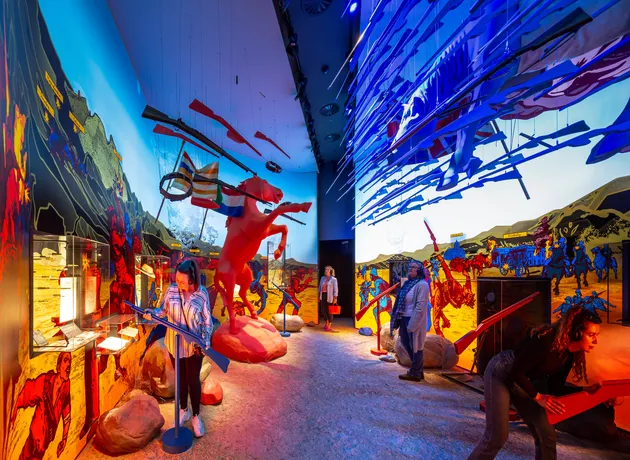
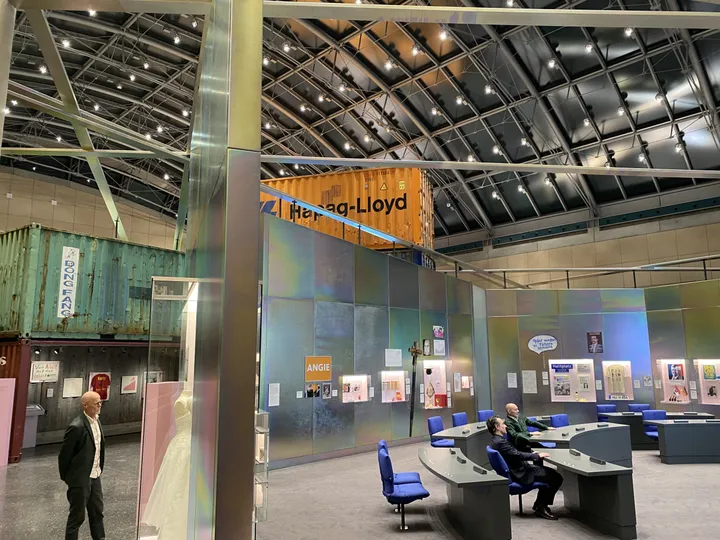
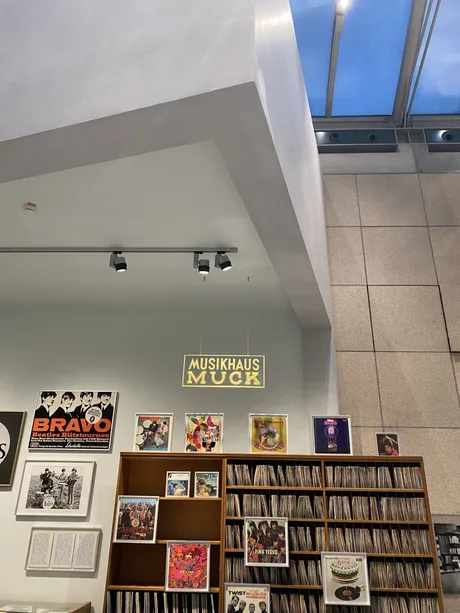
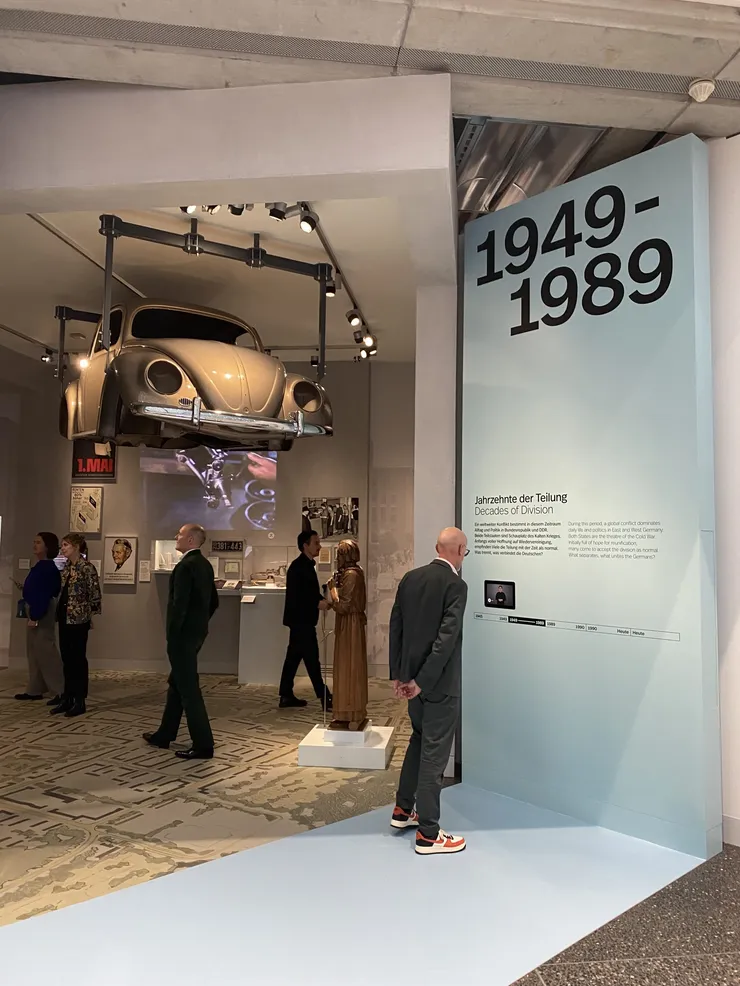
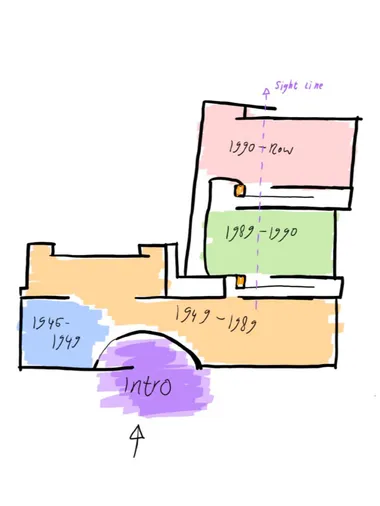
A consequential history calls for a monumental approach. To make the broad outlines of the story clear for visitors, we divided the exhibition into four eras, each with its own spatial metaphor. A grand gesture connects the separate spaces of an era into one narrative, and clearly distinguishes the eras from one another. Within each era, visitors encounter a variety of stories and scenes, from the wooden chair in Gorbachev’s country house to the dachshund mascot of the Munich Olympics.
Three-part collage
Working with the building
Daylight
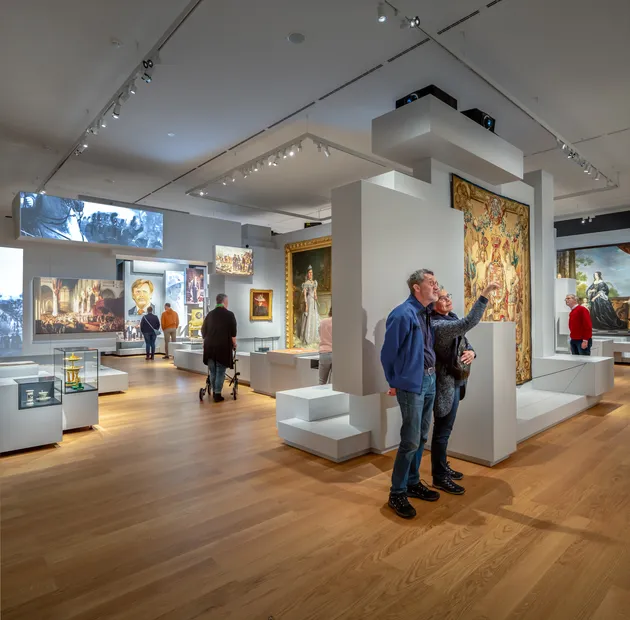
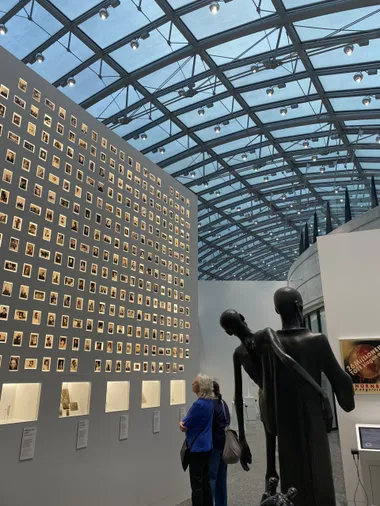
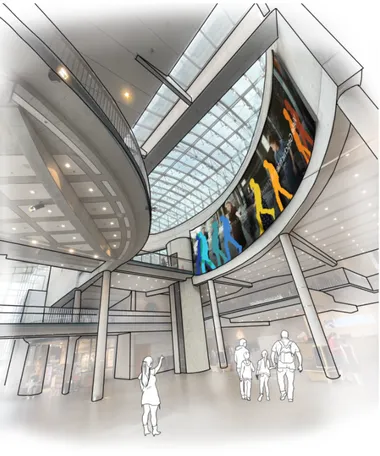
The museum’s glass roofs let in plenty of daylight. That’s why we’re leaving our usual projectors at home. Instead, we’re using LED screens and playing with the shadows of objects and tall structures, such as the network in the fourth era. We’re making good use of the height with high walls and enormous objects, like the three stacked containers.
Architecture
The building’s distinctive architecture is prominently featured in the exhibition. We didn’t want to compete with or hide the architecture, but rather enhance it. The building and the exhibition tell one story. That’s why we left as much of the building’s walls untouched. The natural stone remains visible between the scenographic elements.
Routing
We have reversed the original visitor journey through the exhibition. Visitors now first walk up a long ramp and then descend as they explore the exhibition. From the upper floors, this creates all kinds of exciting sightlines further into the exhibition. Visitors have a better overview, and the downward ramps become moments of reflection and anticipation.